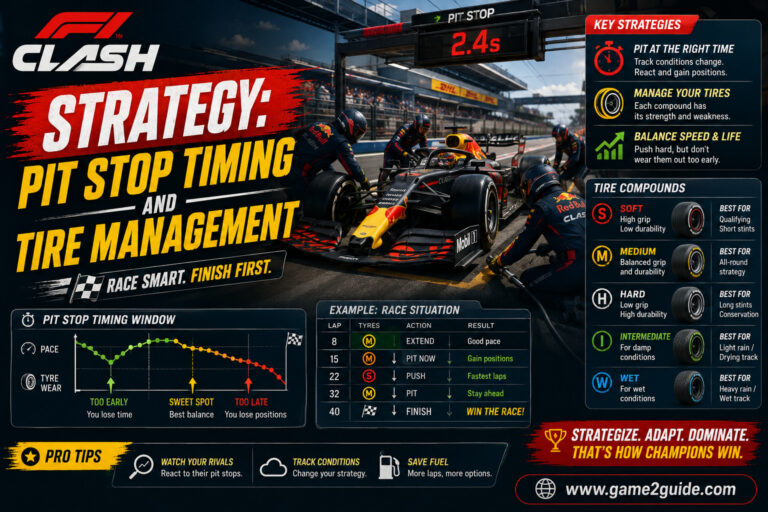
Winning an F1 Clash race often comes down to decisions made away from the actual racing screen. This guide breaks down F1 Clash pit stop strategy, how tire management quietly decides races before the final lap even arrives, and why so many players lose races they were technically winning just a few laps earlier. This game has 4.52 stars, 10M+ downloads.
F1 Clash sits in an unusual corner of the racing genre, blending team management with head-to-head race simulation rather than direct manual driving. That structure means strategy decisions carry more weight than reflexes do. Pit timing and tire choice are not side details here. They are the actual game.
Why Pit Stop Timing Decides More Than People Think
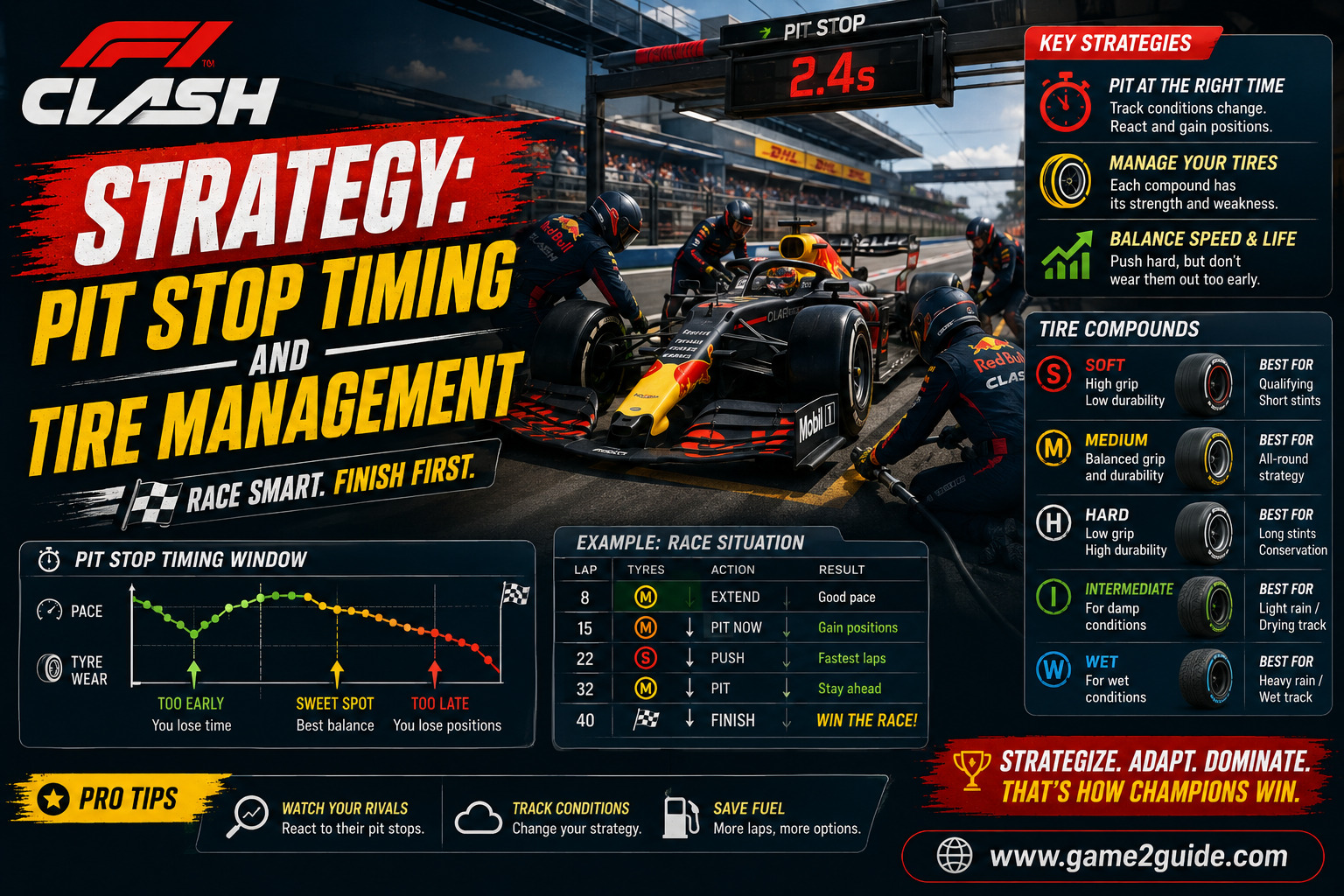
Pitting too early wastes tire life you had not fully used. Pitting too late means racing on worn tires that lose grip and time with every lap, often without any obvious warning sign until it is too late to recover.
It works a bit like refueling a road trip. Stop too soon and you have wasted a perfectly good tank. Wait too long and you are stranded on the shoulder wondering how it happened so fast. F1 Clash punishes both mistakes almost equally.
Reading the Tire Degradation Curve
Tire performance in F1 Clash does not decline in a straight line. It holds relatively steady for a stretch, then drops off sharply once degradation crosses a certain threshold. Recognizing when that drop-off is approaching, rather than reacting after it hits, is the core skill behind good pit timing.
Matching Tire Compounds to Race Conditions
Tire choice interacts directly with pit timing, and getting the pairing wrong undoes even a well-timed stop.
- Soft compounds — fastest lap times early, but degrade quickly and demand earlier pit stops
- Medium compounds — a balanced middle ground, forgiving for players still learning stop timing
- Hard compounds — slower initial pace, but stretch much further before needing a change
Choosing softs for a long stint without planning an early pit stop almost always backfires. Choosing hards for a short sprint race wastes potential pace you never needed to sacrifice.
Building a Two-Stop Strategy
For longer races, a two-stop strategy generally outperforms a single long stint, provided the stops are timed well. Splitting tire wear across three shorter stints keeps your car closer to peak performance throughout the race instead of nursing badly worn tires for the final laps.
A Simple Two-Stop Framework
- Start on a compound suited to early pace, usually soft or medium
- Monitor degradation and pit just before performance drops sharply, not after
- Switch to a compound suited to the middle stint, factoring in remaining race length
- Plan the second stop around the final stretch, prioritizing a compound that holds up to the finish
- Avoid matching both stops to the same compound unless race length genuinely calls for it
This framework is not rigid. Race length, opponent strategy, and car setup all shift the ideal timing slightly, but the underlying structure holds up across most race types.
Reacting to Opponent Strategy
F1 Clash strategy is not just about your own car. Watching when opponents pit, and what compound they switch to, tells you a great deal about the strategy they are committing to. If a rival pits early on softs, they are likely gambling on late-race pace. If they hold out on hards, they are betting on consistency over speed.
Adjusting your own pit window based on this information, rather than sticking rigidly to a pre-planned schedule, separates players who consistently place well from those who win occasionally by luck.
Car Setup and Tire Management Work Together
A related area worth studying alongside pit timing is car setup itself, since aerodynamics and handling upgrades directly affect how quickly tires degrade in the first place. A car tuned for stability under load stretches tire life further than one optimized purely for straight-line speed, which changes how aggressive your pit strategy can afford to be.
Common Pit Strategy Mistakes
A handful of habits show up repeatedly among players stuck in a strategy rut:
- Pitting reactively only after noticing a clear performance drop
- Ignoring opponent tire choices and racing with blinders on
- Using the same compound pairing regardless of race length or track
- Overcommitting to a single long stint to avoid losing track position temporarily
- Underestimating how much a well-timed undercut can shift final race position
Fixing even one or two of these habits noticeably improves race outcomes over time.
Timing the Undercut
One of the more advanced tools in F1 Clash strategy is the undercut — pitting slightly before an opponent to gain track position once they eventually stop on older tires. Executed well, this single decision can flip a race that looked lost just a few laps earlier. It requires confidence in your degradation reading, but it is one of the highest-value plays available once you are comfortable with basic pit timing.
Final Thoughts
Good F1 Clash strategy comes down to reading tire degradation before it becomes obvious, matching compounds to race length rather than habit, and reacting to what opponents are doing instead of racing in isolation. Get pit timing and tire management right consistently, and race results start reflecting genuine strategic decisions rather than lucky guesses.
Frequently Asked Questions
When is the best time to pit in F1 Clash?
Just before tire performance drops sharply, rather than after. Recognizing the early signs of degradation matters more than reacting to an obvious slowdown.
Should I always use soft tires for the fastest lap times?
Not necessarily. Soft tires degrade quickly, so they work best in short stints with an early pit stop planned rather than as a default choice for every race length.
Is a two-stop strategy always better than one stop?
For longer races, generally yes, since it keeps tire wear more evenly distributed. Shorter races may not need the extra stop at all.
What is an undercut in F1 Clash strategy?
An undercut means pitting slightly earlier than an opponent to gain track position once they eventually stop on more worn tires. It is a high-value move once pit timing basics feel comfortable.
About the Author